LIS 568 Review - PebbleGo
Exploring PebbleGo: A Research Platform for Emerging Readers
As young children begin to read and make sense of the world, it’s important that the tools we give them match where they are in their learning journey. PebbleGo, created by Capstone, is a digital resource designed specifically for students in kindergarten through third grade. It supports early research skills, builds content knowledge, and encourages independent learning — all within an age-appropriate, accessible platform.
If you’re a librarian, classroom teacher, or tech integrator looking to bring more nonfiction into the hands of emerging readers, PebbleGo is a resource worth exploring.
📚 What Is PebbleGo?
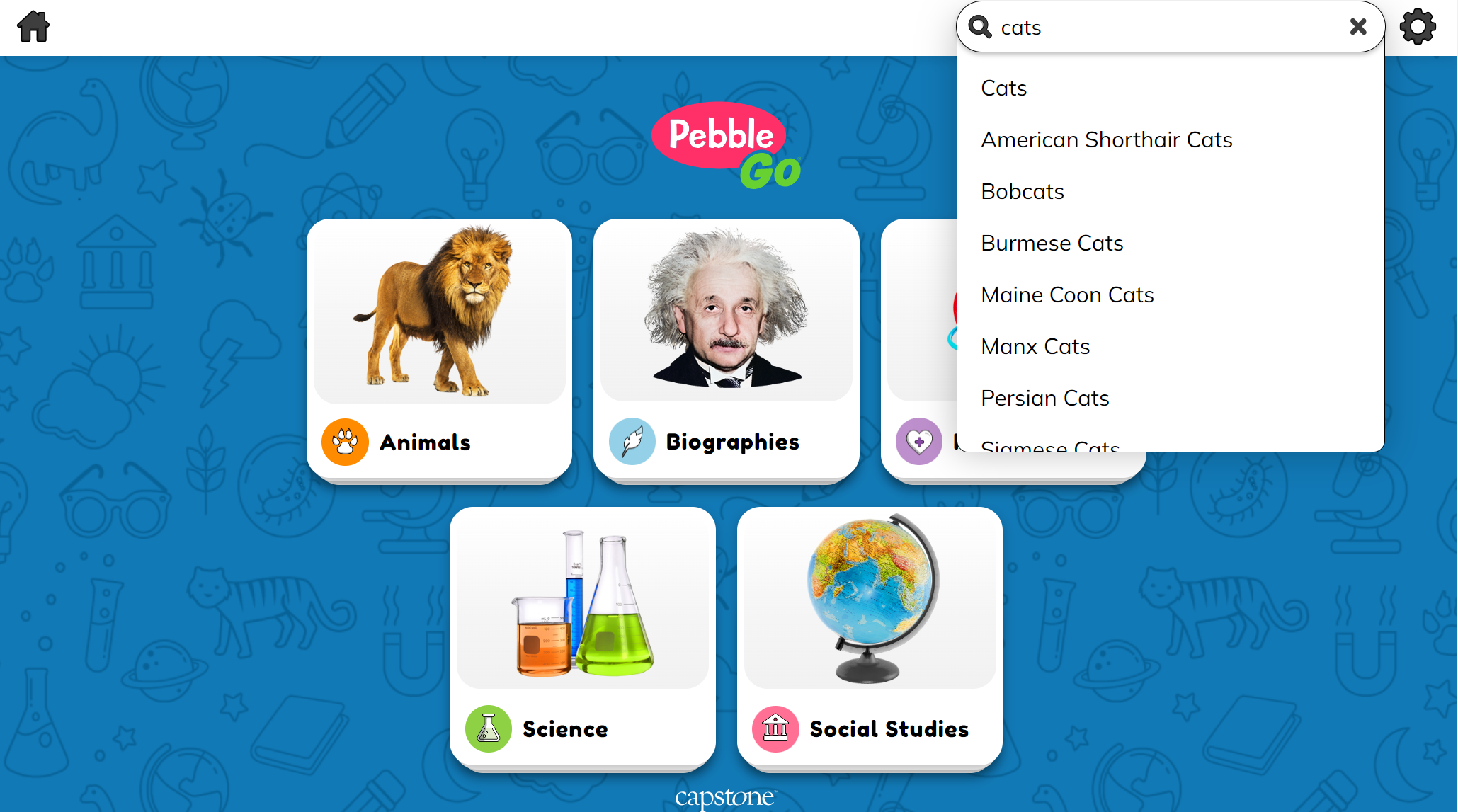
PebbleGo is a web-based platform filled with short, engaging nonfiction articles written for early elementary students. The content is broken into five subject areas:
Animals
Biographies
Science
Social Studies
Health
Each database includes hundreds of articles organized by topic. The articles use simple language and are supported by visuals, audio narration, and glossary terms to help students understand what they’re reading. This format makes it easier for young learners to begin exploring topics independently, even if they’re still developing confidence as readers.
💡 How It Works
The PebbleGo homepage is designed with young students in mind — large icons, clear categories, and limited distractions make it easy to navigate. Students can either browse by topic or use a search bar to look for something specific.
Once inside an article, information is organized into tabs (for example: "Habitat," "Food," "Life Cycle"). Each section includes:
Read-aloud audio recorded by real people, with word-by-word highlighting
Photos or videos to support understanding
A visual glossary for new vocabulary
Optional activities and questions for follow-up
There are no outside links or ads, which helps create a safe, closed space for students to learn and explore.
For teachers and librarians, PebbleGo also includes features like printable versions of articles and built-in activities that can be used in lessons, centers, or group work.
✅ What Stands Out
Accessibility: The read-aloud feature and simplified text make PebbleGo a strong fit for emerging readers, English language learners, and students who benefit from audio support.
Curriculum Connections: Articles are aligned with early elementary standards, especially in science, social studies, and literacy.
Engagement: The visual layout and bite-sized content make it approachable and fun for young learners.
Ease of Use: Students don’t need individual logins, which makes PebbleGo simple to use in classrooms, library settings, or at home.
🚦 A Few Things to Keep in Mind
Surface-Level Coverage: Articles are meant to be introductory. While that works well for this age group, older or more advanced students may need additional sources for deeper learning.
Best for Early Grades: PebbleGo is most effective with students in grades K–2 and possibly early 3rd grade. For older students, Capstone offers a companion product, PebbleGo Next, with more detailed content.
Subscription-Based: PebbleGo is not free, and pricing depends on the number of databases and users. Schools or districts can contact Capstone directly for a quote.
🏫 How It’s Used in Schools
PebbleGo is flexible and can be used in many ways:
As a starting point for simple research projects on animals or famous people
During library class to introduce note-taking or nonfiction text features
In reading centers or stations where students explore a topic of interest
To build background knowledge during science or social studies lessons
As a tool for cross-curricular learning and class presentations
Many educators use PebbleGo to help young students gain confidence with nonfiction reading and develop early research habits, like asking questions, finding facts, and sharing what they’ve learned.
🌱 Final Thoughts
PebbleGo is a thoughtfully designed platform that helps children take their first steps into independent research. It’s not meant to replace other tools, but to provide a foundation — a safe place for students to explore nonfiction in a way that matches their reading level and curiosity.
For schools that are focusing on digital literacy, content integration, or early research skills, PebbleGo can be a valuable addition to the toolbox. It’s a resource that truly meets young learners where they are — and helps them grow.
-Ahnalese


Comments
Post a Comment